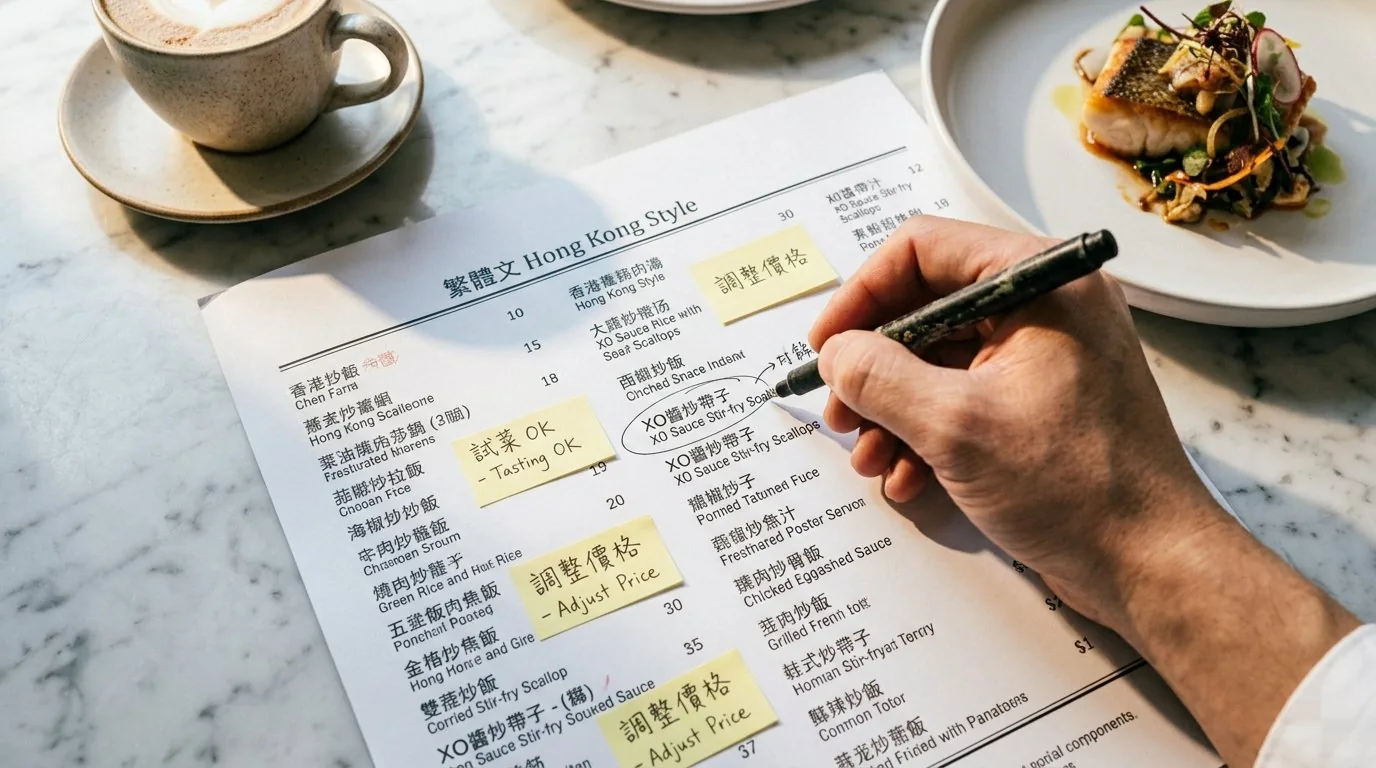
Most owners assume the signature dish that sells the most must earn the most. But work out the margin dish by dish, and you discover the crowd favourite carries high costs and a thin margin — the more it sells, the more it dilutes your profit — while your genuinely high-margin dishes sit tucked away in a corner of the menu, never pushed and never ordered.
This illusion is extremely common — and its most direct consequence is that the dish you believe is your "top earner" may be exactly the one dragging down your overall profit.
The fix is called menu engineering. This article shows you how to use it to turn your menu into a money-making machine — without raising prices or changing ingredients.
Key Takeaways
- Popular ≠ profitable: your best-selling signature dish often carries high costs and a thin margin — the more it sells, the more it dilutes your profit.
- Sort every dish into 4 categories: cross popularity × margin, and each dish lands as a Star, Plough-horse, Puzzle, or Dog — each with its own play.
- No price rise needed: golden sightlines, dropping the dollar sign, better descriptions, and limiting choice rework the menu to lift profit.
- Start with 5 dishes: pick your 5 best-selling dishes, work out their margins, and check them against where they sit on the menu.
What Is Menu Engineering?
Menu engineering analyses every dish along two dimensions:
- Popularity (does it sell a lot or a little)
- Margin contribution (does it earn a lot or a little)
Cross the two, and every dish lands in one of 4 boxes. Your job is to treat each dish according to where it sits.
4 Categories of Dishes, Each With Its Own Play
1. Stars (high popularity × high margin)
Your golden eggs. Give them the most prominent placement, push them hard, and keep quality consistent. Whatever you do, don't tinker with them.
2. Plough-horses (high popularity × low margin)
Ordered by everyone, but not making money. Find ways to bring the cost down (swap ingredients, control portions), nudge the price up slightly, or sell them bundled with high-margin sides.
3. Puzzles (low popularity × high margin)
Profitable but rarely ordered — the most worth rescuing. Move them to a prominent spot, give them a more appealing name, and have front-of-house recommend them proactively.
4. Dogs (low popularity × low margin)
Neither profitable nor popular. Rework them or take them off the menu decisively — don't let them tie up menu space and kitchen resources.
Practical Tricks for Reworking Your Menu
- Golden sightlines: place Stars and Puzzles in the top right, along the top, or in a standalone box — where customers' eyes land most easily.
- Drop the dollar-sign habit: the "$" symbol reminds customers they're spending money — research has shown that softening how prices are presented helps sell higher-priced dishes.
- Use descriptions well: words about ingredients, technique and story lift perceived value, and customers become more willing to order high-margin dishes.
- Limit choice: when a menu runs too long, customers struggle to decide and default to the familiar cheap options. A tighter menu actually lifts average spend per head.
See Every Dish's Margin in Real Time, With AI — No Waiting for Month-End
Menu engineering rests on one prerequisite: knowing each dish's true margin — and that is exactly the data most restaurants lack. To get the margin right, you first have to nail down each dish's food cost ratio. Maintaining costs and sales figures for dozens of dishes in Excel falls behind fast. That's the step InvSpot handles with AI: scan a delivery invoice and the system computes each dish's cost and margin automatically — no Excel, no waiting for month-end — so you can see which dishes actually earn and which just sell, while there's still time to fix the menu. A proper tool should at least be able to:
- Calculate each dish's true cost and margin, so the 4 categories sort themselves out instantly.
- Flag low-margin dishes, so you know which to rescue and which to rework.
- Combine sales data, so you see popularity × margin side by side and stop reworking the menu on gut feel.
Only with all three in place can you genuinely claim to be reworking your menu on data. Without those cards in hand, every change is just a guess.
FAQ
Won't removing a popular dish drive customers away?
Plough-horses (high popularity, low margin) don't necessarily need to go — try cutting their cost or fine-tuning the price first. The ones that genuinely need removing are the Dogs.
How often should I rework the menu?
A review every quarter is recommended, in step with seasonal ingredients and cost changes. Big overhauls needn't be frequent, but the data should be watched continuously.
My restaurant is small and the menu is short — do I still need menu engineering?
The shorter it is, the more you need it. With fewer dishes, each one has a bigger impact on profit — all the more reason every dish has to make money.
Conclusion: A Menu Isn't a List of Dishes — It's Your Profit Map
A menu's profit is built out of trade-offs. Know each dish's true margin first, then arrange the menu by popularity and margin — push the Stars, rescue the Puzzles, fix the Plough-horses, cut the Dogs — and you'll find that without raising prices or opening another shop, reworking the menu alone can lift your earnings a good step. (Plenty of the shops in the closure wave leaned on their best-selling dish to keep the lights on, never realising it was the very thing dragging the numbers down.)
With clear numbers, redesigning the menu or repricing stops being a gamble and becomes a decision you can test and measure.
Start today: pick the 5 best-selling dishes on your menu, work out their margins properly, then check where they sit on the menu. Your menu's profit map may look nothing like what you assumed.