Most kitchens reckon they "don't waste much" and put their wastage rate at around 5%. But add up everything that gets written off, spoiled, mis-cut or mis-fired and calculate it properly, and it turns out to be 12%.
That 7% gap, multiplied by a few hundred thousand dollars of monthly purchasing, is tens of thousands quietly draining away. The trouble is that wastage never appears on any bill — so unless you track it, you will never know where that money went.
Food wastage is the most easily underestimated cost in a restaurant. This article shows you where wastage comes from, how to calculate it, and 5 tactics to bring it back to a reasonable level.
Key Takeaways
- You guess 5%, it's really 12%: add up the write-offs, spoilage, mis-cuts and mis-fires and the 7% gap is tens of thousands quietly draining away each month.
- Healthy range is 4%–6%: controllable wastage generally sits here; once it hits double digits there's a source that needs dealing with.
- How the rate is calculated: wastage value ÷ total purchases × 100% — $36,000 ÷ $300,000 is 12%.
- 5 tactics to plug the leaks: FIFO, standardised portions, using offcuts, buying to actual sales, and regular stocktakes.
Where Does Wastage Actually Come From?
Wastage isn't one single cause — it's many small leaks added together:
- Over-purchasing: buy too much, and what you can't use in time spoils and gets written off.
- Poor storage: the wrong temperature, humidity or placement, and fresh stock goes off early.
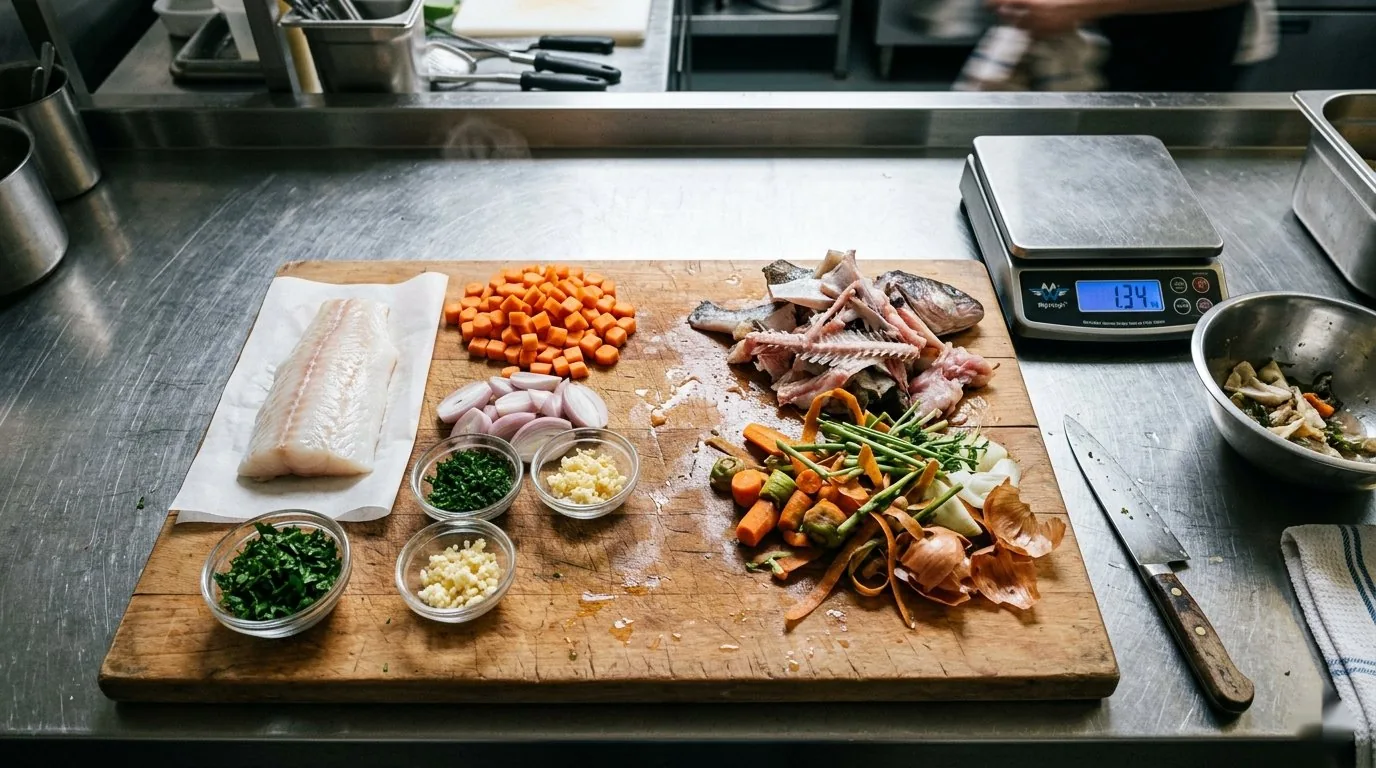
- Processing wastage (yield loss): what's lost to filleting, peeling and trimming. A whole fish may leave you only 60% you can sell.
- Inconsistent portioning: a heavy-handed chef puts extra ingredients into the same dish.
- Botched cooking and mis-fired orders: re-fires and returned dishes are all cost.
- Theft or internal shrinkage: the books and the physical stock don't reconcile.
None of these looks like much on its own — but together they add up to a startling number.
How Do You Calculate the Wastage Rate?
Wastage rate = wastage value (write-offs + spoilage + processing wastage) ÷ total purchases × 100%
For example: purchase $300,000 in a month, with $36,000 of that written off or spoiled, and your wastage rate is 12%.
Healthy levels vary by cuisine, but the industry generally keeps controllable wastage at around 4%–6%. Once it hits double digits, there is definitely a source that needs dealing with.
5 Tactics to Cut Food Wastage
1. First In, First Out (FIFO)
Use the old stock first; put the new stock at the back. The simplest tactic — and the one most kitchens fail to do properly.
2. Standardise Recipes and Portions
Write down exactly how much of each ingredient goes into every dish, and use measuring tools — don't rely on feel. Only with consistent portions can costs be calculated accurately.
3. Make Use of Offcuts
Vegetable trimmings go into soup; the bones left after filleting go into stock. Turn "wastage" back into "product".
4. Buy to Actual Sales
Don't guess. Look back at your sales history and buy the right amounts — write-offs fall naturally.
5. Stocktake Regularly and Trace the Source
When the wastage rate rises, run a proper stocktake to find out which item and which step went wrong, and treat the cause directly.
See Your Wastage in Real Time, With AI
The hardest thing about wastage is that it's invisible — the money is already gone and you may not even know it. Tracking every ingredient's wastage continuously and accurately by hand is next to impossible. That's the step InvSpot handles with AI: scan a delivery invoice and the system compares what you bought against what you actually served and computes each ingredient's wastage — so you see the bleed while there's still time to fix it. Whichever tool you choose, it should at least be able to:
- Compare quantities purchased against quantities served, and calculate the actual wastage of every ingredient.
- Flag ingredients with abnormal wastage, so you know immediately which item has gone wrong.
- Convert wastage into actual dollars lost — a number that stings is what motivates change.
The key here is turning invisible waste into a visible number — only then does "whether to fix it" become a decision the owner gets to make.
FAQ
Does processing wastage (yield loss) count towards the wastage rate?
You can treat it separately. Processing wastage is mostly unavoidable, but you can use it to compare suppliers (at the same price, whose yield is higher) and to optimise recipes.
Is getting the wastage rate down to 0% ideal?
It's impossible — and unhealthy. Cutting too hard sacrifices quality and portions, and drives customers away. The goal is "reasonable", not "zero".
How do I tell whether wastage is theft or normal waste?
Through stocktakes. When recorded usage and physical stock persistently fail to reconcile, and normal wastage has been ruled out, watch for internal shrinkage.
Conclusion: Wastage Is the Profit You Can't See
Food wastage never appears on any bill, yet it eats into your profit every single day. (That's exactly what most of the closures in the closure wave had in common — not empty tables, but not seeing the bleed in time.) Calculate your wastage rate, find the sources, and plug the leaks one by one — you'll find that without raising prices or chasing new revenue, simply stopping the leaks already earns you more.
Start today: pick the ingredient you spend the most on, and do one proper stocktake of "how much was bought" against "how much was actually served". That gap is usually bigger than you'd imagine. With clear numbers, cutting wastage stops being a gamble and becomes a decision you can test and measure.