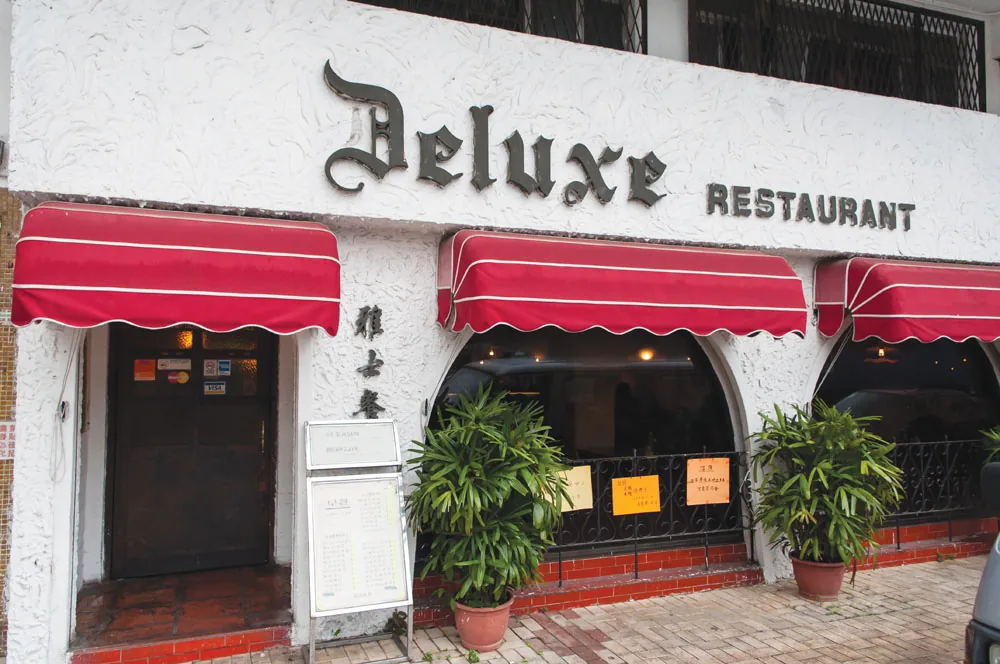
I only ever went once, back then.
Luen Wo Hui, Fanling. Push open the door and there it was: white walls, arched partitions, an English-style bar counter laid in red brick — that old-Hong-Kong Western-restaurant feeling where one look tells you the place has stories. Only later did I learn its name: Deluxe Restaurant. It had stood on that street corner for a full 45 years — even the Tourism Board knew it — drawing expatriates from the nearby barracks and diners from every corner of Hong Kong who made the trip specially.
Then last week, the news: Deluxe Restaurant will say goodbye on 31 July. Not because the food slipped. Not because the customers stopped coming. Because the landlord raised the rent, and no deal could be reached. One line from a staff member cuts deep: "Maybe he thought the Deluxe Restaurant name could take it."
A landmark that ran for a full 45 years — and the cause of death wasn't in the kitchen.
Key Takeaways
- The cause of death wasn't in the kitchen: Deluxe ran for 45 years with its reputation intact; it fell at the rent line, not on cost control.
- The threshold: once rent crosses roughly 25% of revenue, no amount of purchasing discipline can fill the hole.
- Saved margin is ammunition: squeezing Prime Cost from 65% down to 58% frees 7 percentage points — the capital that lets you absorb a rent rise, negotiate the lease, and pivot.
- The walk-away line: work out your "maximum affordable rent", so that "the landlord raised the rent" becomes a decision you calculated long ago instead of a panic.
One Brutal Piece of Arithmetic
Plenty of people assume a restaurant closes because it was "run badly". But in this wave of closures, the ones falling are often long-standing names that were managed very well. The problem isn't cost control — it's the rent line.
Within a restaurant's costs, Prime Cost (food + labour) is the part an owner genuinely controls; rent is essentially the landlord's call, especially when the lease comes up for renewal.
Suppose a very well-run restaurant squeezes Prime Cost down to 58% (top-tier for the industry). The remaining 42% has to fit everything else:
| Line item | Share of revenue |
|---|---|
| Prime Cost (food + labour) | 58% |
| Utilities | 4% |
| Other expenses (marketing, insurance, maintenance, POS, delivery commissions) | 12% |
| Left over for rent + net profit | 26% |
Which makes the threshold brutally simple:
- Rent at 15%: net profit 11% — healthy.
- Rent at 20%: net profit 6% — still manageable.
- Rent at around 26%: break-even — not a dollar earned.
- Rent at 30% or above: operating at a loss — even with a kitchen good enough to run 58% Prime Cost, you still lose money.
In other words: once rent crosses roughly 25% of revenue, no amount of purchasing discipline can fill the hole. That's why so many of this round's closures are decades-old, well-loved, well-managed shops — the problem sits on the rent line, not the food line.
So What Does "Good Management" Actually Manage?
If squeezing costs alone can't save you, how does a good operator respond to a rent increase?
1. Turn the margin you save into ammunition — don't just pocket it
Squeezing Prime Cost from 65% down to 58% means saving 7 percentage points. Those 7 points are your capital: enough to absorb one rent rise, or to fund the moves below. A shop running at 65% doesn't even have the standing to negotiate; a shop running at 58% has choices. That is the most concrete value of a cost system — it manufactures that room for you.
2. Grow the denominator — the rent-to-sales ratio is rent ÷ revenue
Rent is a fixed number. The fastest way to ease rent pressure is to do more business from the same premises:
- Dayparts: turn the dead 3–5pm stretch into afternoon tea, late-night or breakfast service — same rent, more turns of covers.
- Delivery / catering: extra revenue to help carry the rent without adding seats (remember to net off platform commissions).
- Menu engineering by contribution margin: push the high-CM dishes; reprice or cut the low-CM ones. Lift the quality of margin per customer, not just the count.
3. Negotiate rent with data — and this time the market has turned
In this wave of closures, empty shopfronts keep multiplying, and tenants hold their strongest bargaining position in years. Drive out a tenant of 45 years with clean books, and a landlord may well sit on a vacant unit for months. So bring numbers to the table:
- Turnover rent (base rent + a percentage of revenue): hands the downturn risk back to the landlord — increasingly accepted in a soft market.
- Stepped rent increases, early-termination clauses, rent-free fitting-out periods.
- The number that matters most: your "maximum affordable rent" — the rent at which, on current revenue and margins, net profit hits zero. That is your walk-away line. Without it, don't negotiate.
4. What needs changing is the floor area, not the ingredients
A rent problem is usually a square-footage problem. Move prep to a central kitchen, shrink the unit, move to an upstairs shop, or open a ghost kitchen doing delivery only. The number to watch is "rent per profitable seat", not "rent per square foot".
5. Even the exit is management
If realistic revenue simply cannot support rent below 25%, the site doesn't add up. The disciplined move is to negotiate hard, relocate, or close with dignity while the money is still there — and that is exactly what Deluxe's owner did. Leaving is a management decision, not a failure. The system's role here is to make that number unmistakably clear, early — so you decide while you still have six months of cash flow, instead of waking up the month the account turns red.
So What Does Our System Actually Help With?
Honestly: it can't rescue a lease that was already doomed. What we can do is make three numbers impossible to look away from:
- Real-time Prime Cost: food + labour as a live share of revenue — hold the 58% line so the buffer genuinely exists.
- Contribution margin (CM) per dish: grow the quality of the denominator, with data behind your menu engineering.
- Maximum affordable rent / break-even point: that walk-away line — turning "the landlord raised the rent" from a panic into a decision you calculated long ago.
Squeezing Prime Cost won't beat rent. But it gives you margin, the standing to negotiate the lease, and a clear view of the field — and that is exactly the difference between the owner who manages well and the owner left with no choices when the shop closes down.
Thank you, Deluxe, for 45 years alongside Fanling.
And a reminder to every one of us in this trade: good management isn't about winning every battle — it's about always knowing where your line is, and choosing while you still have a choice.
Before 31 July, find time to go back for one more meal.
FAQ
What share of revenue can a restaurant's rent healthily take?
As a general rule, keeping the rent-to-sales ratio (rent ÷ revenue) around 15% is healthy, leaving a double-digit net margin; at roughly 25% you break even and earn nothing; above that you are very likely operating at a loss — even with Prime Cost squeezed to top-tier industry levels.
What is Prime Cost?
Prime Cost = food cost + labour cost, the part of a restaurant's costs the owner controls most. Top-tier operators run it at roughly 58% of revenue. Squeezing Prime Cost down won't beat rent, but it gives you the standing to negotiate the lease and to pivot.
How can a restaurant respond to a steep rent increase?
Negotiate with data (turnover rent, stepped increases, rent-free fitting-out periods), grow the revenue denominator (dayparts, delivery and catering, menu engineering), or downsize — moving to an upstairs shop or a central kitchen. Most important of all: first work out your "maximum affordable rent", your walk-away line.
What is "maximum affordable rent"?
It is the rent level at which, on your current revenue and margins, net profit hits zero. Below that line the business works; the moment the landlord asks for more, you shouldn't renew — you should exit with dignity while the cash flow is still there.
Sources
- Fanling's 45-year-old Deluxe Restaurant to close on 31 July, unable to absorb the landlord's rent increase — HK01 (in Chinese)
- Coverage of the closure of the 45-year-old Western-restaurant institution in Luen Wo Hui — Sing Tao Headline (in Chinese)