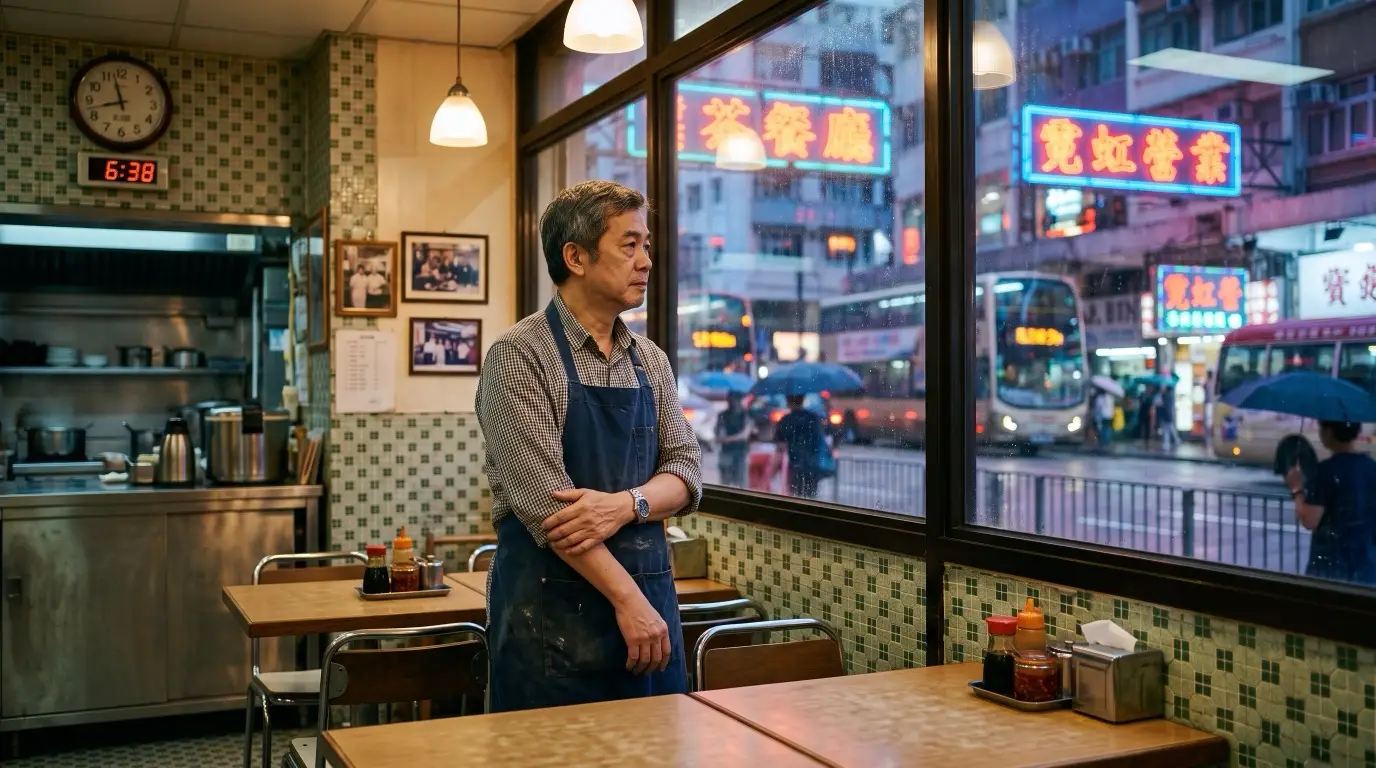
Here's a reality nobody wants to face — but nobody can avoid: Hongkongers heading north to spend isn't a phase. It's the new normal.
According to reports, Hongkongers made around 6.5 million trips north per month on average in 2024. And the pattern has shifted from "weekend leisure" to "everyday life" — meals, groceries, haircuts, doctor's appointments, health checks, all done across the border. Every bit of it business that used to belong to Hong Kong restaurants.
If you're still treating this as a slow season you can grit your teeth through, you'll reach for the wrong rescue.
Key Takeaways
- The scale: around 6.5 million northbound trips a month on average in 2024, with spending shifting from leisure to everyday life.
- The price gap: reports put Shenzhen's overall cost of living at roughly half of Hong Kong's — no amount of discounting catches up.
- Squeezed from both sides: shopping's share of mainland visitors' spending in Hong Kong fell from 70.5% in 2018 to around 44% (Mastercard), and the money that does flow back doesn't necessarily land in traditional Chinese restaurants.
- What you can do: you can't raise prices and you can't win the diners back — the only lever is your cost line. Watch every dollar of your costs in real time; don't wait for month-end.
This Is Structural, Not a Slow Season
Before the pandemic, Hong Kong set the pace between the two cities; now it's flipped, and Shenzhen leads. This shift isn't weather. It's gravity.
Even peak season can't hold the line: last Easter, the SCMP reported restaurant takings down around 6–7%, with a 15% rise in mainland visitors unable to fill the hole left by 1.7 million locals heading out of town.
And it's a squeeze from both ends. On one side, Hongkongers go north; on the other, mainland visitors are trimming what they spend in Hong Kong — shopping's share of trip spending fell from 70.5% in 2018 to around 44% in the first quarter of 2026 (Mastercard data). Even where that money shifts into dining and experiences, it doesn't necessarily land in traditional mid-priced Chinese restaurants. The mid-market is stranded at both ends.
Why Gimmicks and Price Cuts Won't Save You
Shenzhen is roughly half the price. However hard you slash, you can't win — you'll only drag your own gross margin down with you.
Gimmicks and pop-up stunts can pull a customer in once, but they can't keep them — because you're not solving the reason people go north in the first place: price and choice. You can't control that flow of people, any more than you can control the tide.
When demand has fallen structurally, you can no longer count on "doing more business" to dilute your costs. You have to make every dollar work smarter than it did before.
You Can't Control the Footfall — But You Can Control Your Cost Line
The question shouldn't be "how do I win customers back", but "with fewer customers, how do I make sure no invoice slips through and every dish still earns". In a soft market, every dollar sitting in these gaps is critical:
- Which supplier raised prices while you weren't looking?
- Which dish loses more money the more orders it takes?
- Which stock came in, sat unused, and expired into write-offs?
You can't change demand — but these three holes, you can plug. And plugging them starts with being able to see them.
What Our System Does to Help
InvSpot can't call your customers back across the border. What we can do, while covers are falling, is make every dollar of cost impossible to look away from:
- Real-time food cost ratio: no waiting for month-end close — know where your cost line stands at any moment.
- Supplier price-rise alerts: which supplier quietly raised prices — you know the moment the invoice comes in.
- Contribution margin per dish: which dishes genuinely earn and which drag you down — with numbers, so the cuts land precisely.
In a market where demand is structurally weakening, the one who survives isn't whoever grabs the most customers — it's whoever knows most clearly where every dollar goes.
The northbound tide isn't receding any time soon. You can't chase it — and in truth, you don't need to.
Hold your own cost line, and you'll have the reserves to last until the day the tide turns.
Want to know where every dollar of your restaurant's costs is actually going right now?
FAQ
Is northbound spending by Hongkongers a long-term trend?
Yes. Hongkongers made around 6.5 million northbound trips a month on average in 2024, and spending has shifted from weekend leisure to everyday life (meals, groceries, health checks). With Shenzhen's overall cost of living roughly half of Hong Kong's, this is a structural shift, not a short-term slow season.
How can restaurants respond to the northbound spending wave?
You can't raise prices, and you can't win back diners who've already crossed the border. What you can do is hold your cost line — watch food costs in real time, catch supplier price rises, and cut loss-making dishes to protect gross margin under lower demand.
Why can't discounts win those customers back?
Shenzhen is roughly half the price overall — no discount closes that gap, and cutting prices only crushes your own gross margin. The real lever is cost efficiency, not out-discounting Shenzhen.
How can a restaurant control costs in real time?
Digitise your paper invoices and you can see your real-time food cost ratio, supplier price-rise alerts and contribution margin per dish — without waiting for month-end close. That is exactly what InvSpot does.
Sources
- The scale of northbound travel and the shift in spending patterns — The Diplomat
- Shenzhen's cost of living roughly half of Hong Kong's — China Daily HK
- Easter restaurant takings down around 6–7%; 1.7 million locals travelling out — South China Morning Post
- Mainland visitors' shopping share down from 70.5% to around 44% (Mastercard) — Dim Sum Daily