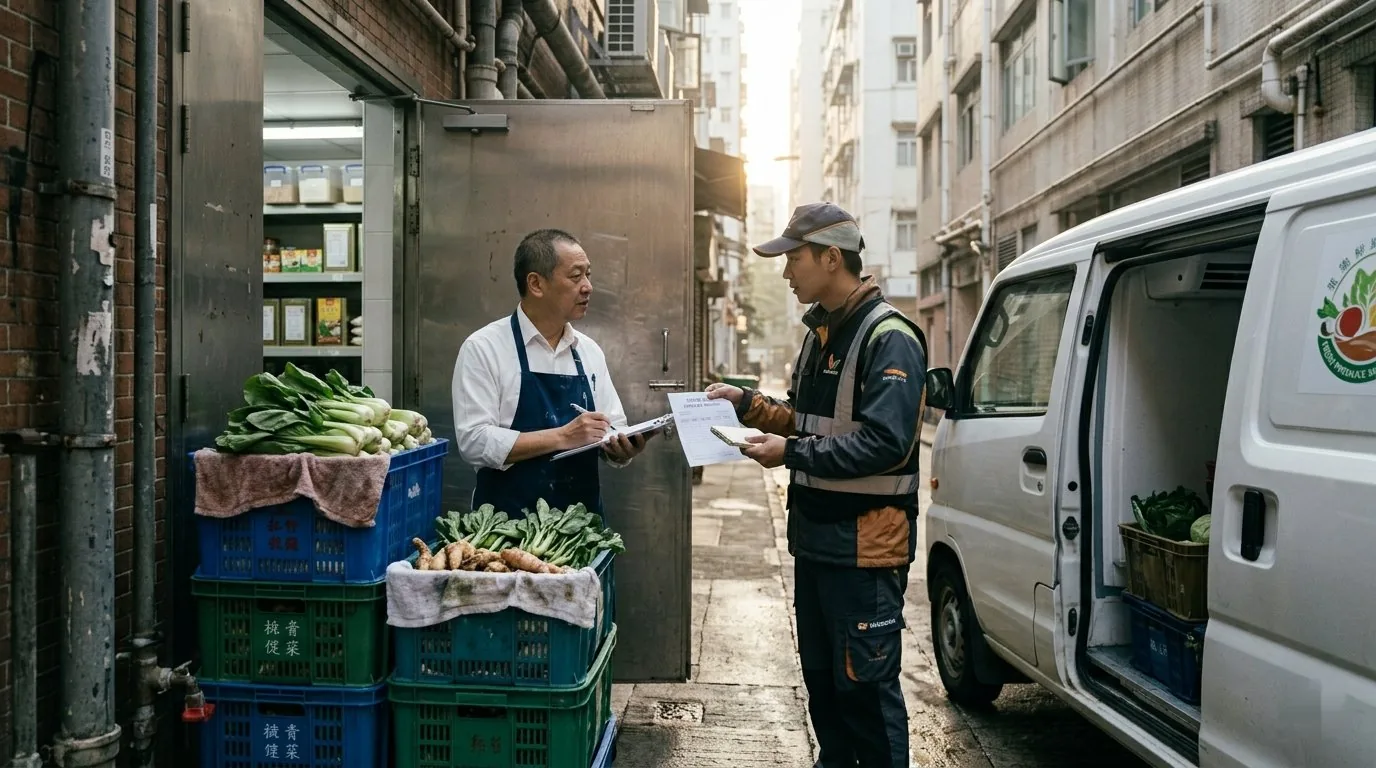
Many restaurants stay with the same supplier for years — familiar, convenient, trustworthy, "surely the best deal". But pull three years of invoices and actually compare, and you'll find quiet little price rises every year. Cumulatively, the same ingredient is now a good 15% more expensive — and you never knew.
This kind of creeping price rise is the hardest to deal with. A 2%–3% bump at a time is imperceptible, but compounded over three years that's 9%, 10% or even more — quietly inflating your food cost ratio. With no records and no tracking, you have zero negotiating leverage — everything is on their terms.
Supplier management isn't "find one and settle for life". It's continuous comparison and continuous negotiation. This article shows you how.
Key Takeaways
- Creeping hikes hide in plain sight: a 2%–3% bump feels like nothing, but compounded over three years the same ingredient is a good 15% more expensive.
- Evaluate on 4 dimensions, not price alone: price trend, quality and yield, reliability, and payment terms.
- Negotiate with data: "this item has gone up 8% over the past six months" plus a back-up quote beats empty words.
- Start with your top 3 ingredients: go back through this year's invoices and work out how much each has risen.
Why Not Comparing Prices Means Slowly Losing Money
Suppliers rarely raise prices with a fanfare. Typically they:
- Raise a little at a time: 2%–3% per bump goes unnoticed, but a few bumps a year adds up to something substantial.
- Lock you in with convenience: reliable delivery and easy ordering make you too comfortable to switch.
- Over-raise on market swings: when vegetable or meat prices climb, they raise along with them — but when the market falls back, the price doesn't.
The core of the problem: without records and price comparison, you have no negotiating leverage at all. Everything is on their terms. And this kind of unseen, slow bleed is exactly the hidden killer behind so many of the shops in the closure wave.
The 4 Dimensions for Evaluating a Supplier
Don't look at price alone — look at the whole picture:
1. Price
For the same ingredient at the same quality, who is cheaper over the long run? Look at the trend, not a single quote.
2. Quality and Yield
Cheap isn't necessarily good value. If the yield is low (lots of wastage) or the quality is inconsistent, the final bill can easily be higher.
3. Reliability
Do they often run out of stock, deliver the wrong items, or arrive late? A stock-out often hurts a restaurant more than the price ever does.
4. Payment Terms
Credit terms directly affect cash flow. Thirty days' credit versus cash on delivery is a world of difference for a small shop.
Negotiating with Skill
- Let the data do the talking: "this item has gone up 8% over the past six months" carries far more weight than empty words.
- Consolidate purchasing: pull scattered orders together — volume is what earns you the leverage to discuss discounts.
- Keep back-up quotes: with a second and third supplier's quote in hand, you negotiate from a much firmer footing.
- Don't only push on price: sometimes better payment terms or delivery frequency is worth more to you.
Catch Supplier Price Creep in Real Time, With AI
Tracking the price trend of every ingredient from every supplier over the long term is nearly impossible by hand — especially once you have dozens of ingredients and several suppliers. That's the step InvSpot handles with AI: scan a delivery invoice and the system automatically tracks every ingredient's purchase price, flagging the moment someone slips in a hike — so you catch it there and then, instead of discovering a year of quiet creep only when you reconcile at month-end. Whichever tool you choose, it should at minimum:
- Record every purchase price automatically and chart the trend, so whoever is quietly raising prices is plain to see.
- Compare the same ingredient across suppliers, so the best deal stands out at a glance.
- Consolidate your purchasing data, so you walk into a negotiation with the full set of leverage.
The heart of this is turning you from "led along by the supplier" into "leading the negotiation with data in hand". Which tool you pick is secondary — making that switch is what matters.
FAQ
Won't switching suppliers all the time hurt relationships and reliability?
You don't necessarily have to switch. The point is having options to compare and grounds to negotiate. Often, simply bringing a price comparison to the table is enough for your current supplier to adjust.
My shop's volumes are small — can I really negotiate?
Yes. Consolidate purchasing and reduce the number of suppliers to raise your volume with each one, or find suppliers who specialise in small shops.
How often should I review suppliers?
Review price trends at least quarterly — and more often for ingredients with volatile market prices.
Conclusion: Suppliers Are for Managing, Not Leaning On
A good relationship with a supplier is a fine thing, but business is business. Record first, compare second, negotiate third — once the data is in your hands, procurement costs come back down naturally, and without sacrificing the relationship or the quality. With clear numbers, negotiating or switching suppliers stops being a gamble and becomes a decision you can test and measure.
Start today: pick the 3 ingredients you spend the most on, go back through this year's invoices, and work out what percentage each item has gone up. That step alone is enough to show which supplier deserves a serious conversation.